This guide explains how to interpret and use the keyword set “38 998360235” in procurement-style and inventory-style workflows. Objectively, the number-like token likely functions as an identifier, reference code, or catalog number, while surrounding blank keywords may represent categories or tags. It focuses on how professionals validate suppliers and match records without assuming unverified details.
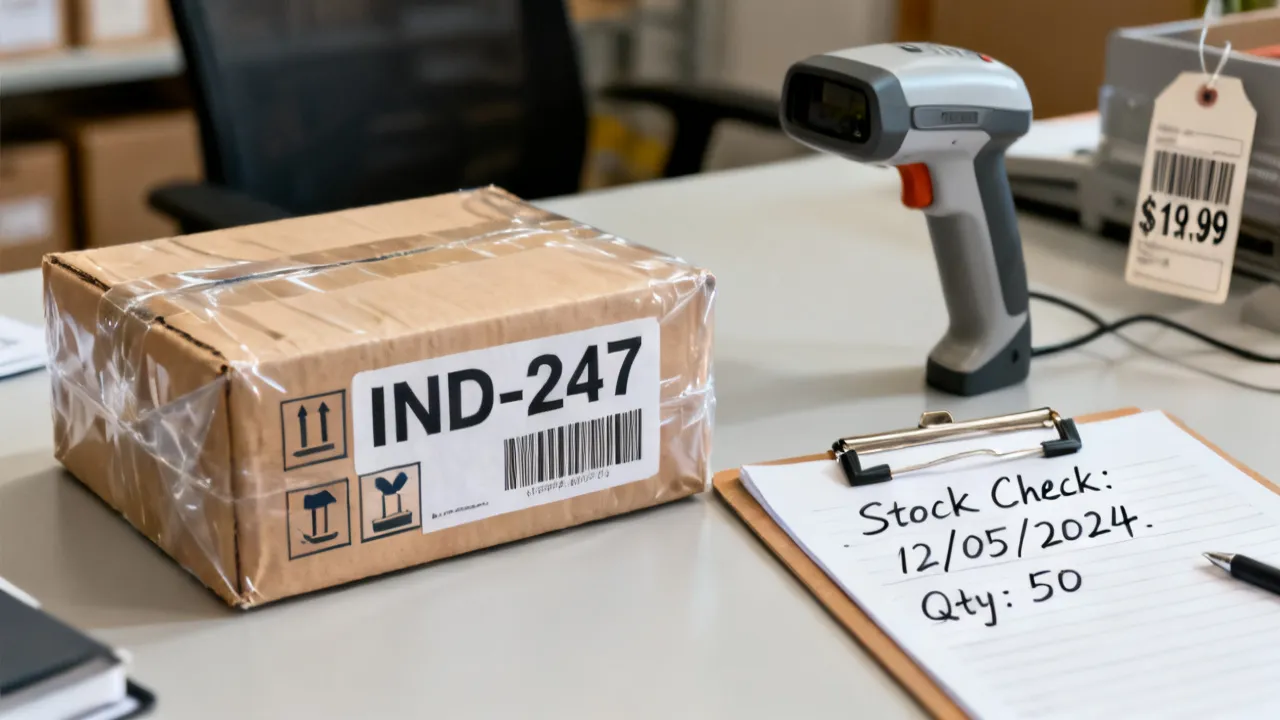
When you encounter the keyword set that includes “38 998360235”—alongside the provided blank-string keyword placeholders—you can treat the numeric sequence as a reference identifier (for example: an internal item code, catalog number, SKU, batch/tracking reference, or a documentation lookup key). In procurement, warehousing, and logistics, correctly mapping an identifier to the right item is often more important than what the label “sounds like” or what descriptive text might imply—because mismatches can cascade into receiving errors, incorrect quality control (QC) outcomes, invoice reconciliation delays, and audit/nonconformance findings.
Because the other provided keywords are empty placeholders (shown as '' in the prompt), the most reliable guidance is to focus on what you can do with the only concrete token: 38 998360235. If later you supply additional non-empty keywords (product name, material type, dimensions, model number, plant location, supplier name, etc.), the same process can be extended to include stronger semantic matching. But until then, a professional approach emphasizes evidence-based verification using primary documents and controlled master data.
In short: treat 38 998360235 as the primary key for record matching, and validate it against supplier paperwork and internal inventory/ERP records rather than trying to infer meaning purely from the format.
Industry professionals commonly encounter numeric sequences structured like 38 998360235 inside systems that manage “master data”—meaning item identity is determined by codes recorded in ERP, procurement platforms, and warehouse management systems (WMS). Even if a supplier’s website or an email includes descriptive phrases, the actual match for purchasing and receiving is determined by the identifiers stored in your authoritative systems.
From an operational standpoint, a token like 38 998360235 can function as:
Without additional context, it would be irresponsible to claim which of these roles applies. The responsible move is to validate against primary records such as purchase orders, packing slips, inbound receiving scans, and invoices—because those documents reflect what your supply chain systems actually used to identify the item.
A professional procurement team typically handles a token like 38 998360235 using a workflow designed to reduce risk and improve traceability. The workflow balances speed (you must act quickly during ordering and receiving) with evidence controls (you must confirm identity before you “lock in” the mapping inside your ERP/WMS).
The key principle is to treat identifiers as objects with referential integrity: the code itself does not “prove” the item; it must be proven by linking the code to corroborating records. That includes both business documents (PO, invoice) and operational logs (receiving scan data, QC inspection records).
Below is a repeatable workflow you can apply in a typical purchasing-to-inventory lifecycle.
The following step-by-step guide expands on how to operationalize the token 38 998360235 across realistic scenarios. It also shows the conditions under which you can proceed confidently versus when you must request clarification or supporting documents.
Capture the raw token exactly as provided. If your source contains the identifier with a space (e.g., 38 998360235), store the raw string with that exact spacing for audit purposes. Keep the original input even if you later normalize it for search.
Normalize formatting only for searching (not for proof). Create a normalized version for matching—such as removing extra spaces or converting delimiters—while retaining the raw string for traceability. Normalization helps with system formatting differences, OCR artifacts, or label formatting variations.
Search internal master data and procurement records. In ERP item master data, search for the exact token or its normalized equivalent. Check whether the token is stored in a field used for supplier part numbers, internal SKUs, or documentation references.
Search supplier documentation repositories and order history. If you have access to your procurement portal or supplier document management system, search for the identifier. Also check historical purchase orders and receipts—because if this is a repeated item, past documents likely provide the correct mapping.
Confirm the identifier appears across at least two independent evidence sources. A robust practice is to confirm that the same identifier (or an officially recognized equivalent format) appears on, for example, the PO and the packing slip/receiving record, or the invoice and the QC/test report.
Validate specification alignment using non-empty attributes where possible. Even if description fields are uncertain, you should confirm key technical attributes if available: dimensions, material grade, compatibility notes, electrical/pressure ratings, or other domain-specific specs.
If compliance is involved, require documentation tied to the identifier. If the item requires certificates (e.g., Certificate of Conformity, CoC/CoA), test reports, or QC inspection documentation, ensure those documents explicitly reference 38 998360235 or at minimum reference the same lot/batch linked to receiving.
Lock the mapping in ERP/WMS only after validation conditions are met. Avoid pushing ambiguous mappings at scale. When uncertainty exists, use a controlled hold status and request supplier clarification.
Reconcile quantities between PO, receiving, and invoice lines. Even when the identifier is correct, quantity mismatches can occur due to backorders, partial shipments, or substitution errors. A discrepancy check prevents downstream payment and inventory issues.
| Scenario / Condition | Recommended Action | How to Confirm Accuracy | Common Pitfalls to Avoid |
|---|---|---|---|
| You have only the identifier “38 998360235” | Search supplier documentation and internal SKU master data using the token exactly (including spaces or formatting) | Match against packing slips, invoice line items, or ERP item codes | Assuming it is a model number without checking receiving documents |
| The supplier provides a catalog page but uses a different formatting | Normalize formatting for comparison while keeping an audit trail of the original string | Look for “equivalent reference” statements in supplier correspondence | Relying on search-engine results instead of supplier paperwork |
| You are matching multiple potential items | Use a “cross-field verification” method (identifier + description + dimensions/spec + compliance fields) | Confirm the same identifier appears across at least two documents (e.g., PO and packing slip) | Matching by description alone when the numeric token differs |
| Compliance or QC is required | Request the relevant certificate, test report, or QC record linked to the identifier | Verify the document references the same token (or same lot/batch if applicable) | Accepting documents that mention the item generally but omit identifiers |
| Invoices show mismatch or receiving shortages | Run a discrepancy check: received quantity vs. invoiced quantity vs. PO quantity tied to the identifier | Reconcile line-level coding in ERP and correct the mapping | Closing disputes without updating the master data mapping |
| Receiving scans do not match the entered token | Freeze the line in a hold state and investigate formatting/OCR/label differences | Compare raw scanned strings vs. normalized codes; check how your WMS barcode mapping treats delimiters | Overwriting the received code without retaining the raw scan evidence |
| Supplier indicates a “code replacement” or “obsolete part” | Document change control: keep old identifier ↔ new identifier mapping with effective dates | Confirm written equivalence and reference it in ERP substitution rules | Replacing identifiers silently without preserving traceability |
| Multiple locations/warehouses are involved | Confirm the correct plant/warehouse item mapping and receiving location constraints | Ensure the identifier appears in the correct inventory ledger for that location | Applying a global mapping without checking site-specific master data |
Your prompt references “supplier details,” yet no explicit supplier name, address, or documentation repository is included. In professional procurement processes, “supplier details” should be treated as structured master data that can support traceability and controlled document flow—not merely as a contact field.
For an identifier like 38 998360235 to be reliable, the supplier must consistently carry that identifier through the documentation chain. When suppliers alter formatting or substitute related codes, procurement teams must record those changes via change control, not via informal assumptions.
At minimum, a supplier record relevant to codes like 38 998360235 typically includes:
When the supplier’s documentation uses inconsistent identifiers, your organization should respond by requesting corrected documents or formal equivalence statements. Doing so protects your ERP mapping and supports audits where documentation completeness matters.
The inverted pyramid approach emphasizes key facts first, and in this context the key fact is that 38 998360235 should be treated as a primary identifier when matching records. Descriptions and other fields are important, but they are usually secondary confirmation rather than primary truth—especially when only one identifier is available.
In typical enterprise workflows, identifiers like 38 998360235 can appear at multiple stages:
Since the prompt includes only a single concrete token, the conservative and professional method is to treat 38 998360235 as the likely “line-item match key” and then validate through at least two independent evidence points (for example, PO + receiving, or invoice + QC report).
Even when 38 998360235 is the correct identifier, misalignment can occur due to formatting differences between systems and documents. This is one of the most frequent sources of “mysterious” procurement errors—especially when one system stores the code with a space, another removes it, and a third adds leading zeros for sorting.
Common formatting-related issues include:
Professional teams address this through:
By treating formatting as a known risk area, you avoid the temptation to assume that “looks the same” implies “is the same.” In procurement, “proof” comes from matching across documents, not from appearance alone.
Your instruction includes a localization rule: “Anytime {city} or {country} appears in keywords, replace it with ‘nearby.’” The provided prompt does not include any explicit city or country token within the shown keyword set, so the substitution is not triggered for 38 998360235 specifically.
However, the localization principle matters for future inputs. In procurement and catalog contexts, teams sometimes include location-specific keywords (warehouse city, delivery country, supplier region) to refine search or routing. To avoid over-claiming sensitive or overly specific location facts, you can apply the “nearby” placeholder approach when location tokens are intended as categorization rather than as confirmed factual attributes.
If later you add additional keywords—such as plant city, shipping country, or compliance jurisdiction—ensure you handle them in a consistent non-sensitive manner. This can help keep catalog matching general while still enabling routing logic that depends on broader regions.
Before treating 38 998360235 as a confirmed item match (and especially before stocking it or enabling automated procurement), you should verify objective conditions. These conditions are intentionally phrased to prevent uncontrolled propagation of errors.
Identifier consistency: the token appears exactly (or as an officially equivalent format) on PO, packing slip, and invoice. If equivalents are used, they should be documented as such.
Specification alignment: technical attributes match your intended use case. Even if you only have the code, you should confirm that any available description fields and associated specs correspond to the correct application (dimensions, material grade, compatibility, performance ratings, etc.).
Compliance/documentation link: when applicable, certificates and QC documents reference the same identifier or associated lot/batch. For regulated environments, missing identifiers in certificates can be a nonconformance.
Change control evidence: if the supplier indicates a code replacement or the item has been revised, confirm written evidence of equivalence or obsolescence. This is critical for continuity and traceability.
Receiving traceability: receiving workflows record the identifier (and ideally lot/batch and quantity). This ensures your inventory ledger and audit trails remain correct.
Lot/batch controls (if serialized/batched): if the code implies a batch reference, verify that your QC records and inventory ledger capture the same batch. Otherwise, you may only trace “what” not “which lot.”
Substitution constraints: verify whether the supplier can substitute a compatible item, and if so, whether substitutions require approval or documentation tied back to 38 998360235.
These requirements prevent operational errors and ensure traceability. They do not assume that the identifier uniquely identifies a category across all suppliers or that the supplier will always maintain identical formatting. Instead, they enforce evidence-based validation.
Your instructions mention integrating “price information,” but the provided prompt content includes no explicit pricing numbers, currency, unit quantity, or pricing conditions. When pricing data is missing, the correct professional approach is to avoid guessing.
In practical terms, you can still structure your purchasing decision process around what you do know (the identifier and verification workflow), but you must confirm price-related fields directly from authoritative sources such as:
Once you obtain price data, the process should ensure that price is stored in the same system context as the verified identifier mapping. That way, invoice reconciliation remains stable even if description text changes. A robust approach includes:
If you later provide explicit price quote details (currency + unit quantity) specifically associated with 38 998360235, you can expand the article with a dedicated pricing section that remains evidence-based and avoids assumptions.
For search engine optimization (SEO), it is usually more effective to incorporate the concrete identifier (here, 38 998360235) naturally in headings and key paragraphs rather than repeatedly “stuffing” the keyword set. Keyword stuffing can reduce readability, and for operational content like procurement guidance, clarity matters more than repetition.
A strong SEO strategy for this content is to:
Because the additional keywords are empty placeholders (shown as ''), the semantic coverage mainly comes from the identifier itself and from the operational terms surrounding it. If later you provide real descriptive keywords (for example, “connector,” “bearing,” “industrial seal,” “medical component,” etc.), the article can be expanded to cover domain-specific spec checks while still maintaining an evidence-first posture.
Processes for item identification, traceability, and documentation control are supported by widely used quality management practices. Even if your supply chain is not strictly regulated, applying these concepts strengthens audit readiness and reduces operational errors.
For further reading, consider these established frameworks and guidance areas:
These references help you build auditable processes for master data control, audit trails, and corrective action. They do not replace supplier documentation or your ERP/WMS evidence records, but they explain why traceability matters and how to structure processes so they can be evaluated.
In procurement and inventory contexts, a numeric token like 38 998360235 is often used as a catalog reference, internal SKU, supplier part number, tracking code, or documentation lookup key. The only reliable method to determine its exact meaning is evidence matching: compare it against PO/packing slip/invoice records and internal master data fields.
Store the raw identifier as you received it, including spaces. Then create a normalized version for search (for example, treating spaces as optional). Still verify the mapping in official documents so formatting differences do not lead to silent misidentification. If possible, capture scanner/OCR raw output separately to preserve auditability.
Yes. Suppliers sometimes revise descriptions while keeping the identifier stable, or they adjust naming conventions without changing codes. However, you should confirm specification alignment (dimensions, material grade, compatibility requirements, etc.). An identifier can be correct while a description is inaccurate, but in any case you should ensure the item you receive matches the intended application.
Depending on your industry and regulatory needs, request documentation that references 38 998360235 or that references the associated lot/batch captured at receiving. Typical examples include datasheets, test reports, Certificates of Conformity/CoA, QC inspection reports, calibration certificates (when relevant), and any compliance documents required by your quality system.
Automation can improve efficiency, but it should be gated by verification conditions. For example: confirm that 38 998360235 appears in both the PO and receiving records, confirm that key spec/compliance fields align (or that your approved cross-reference rules cover it), and ensure the invoice reconciles at the line level. This prevents propagating incorrect mappings at scale.
Do not estimate. Confirm unit price, currency, and pricing terms directly from the supplier quote or purchase order. Then store the price per unit alongside the verified identifier mapping in your ERP so invoice reconciliation remains consistent even if descriptions change.
Do not treat obsolescence casually. Request written change control evidence stating the old identifier ↔ new identifier mapping and effective dates. Then update your item master substitution rules only after reviewing documentation for equivalence and any spec changes that affect drop-in compatibility or regulatory compliance.
Use cross-field verification. Confirm the identifier appears alongside the same key attributes (specs, dimensions, UOM, compliance requirements) across documents. If multiple internal items share the same code due to data quality issues, you should resolve the master data problem through controlled correction rather than letting ambiguous records coexist.
Retain raw OCR output and apply validation checks. If your system extracts 38 998360235 from an image, confirm that the extracted token passes integrity checks (such as matching the expected length/format and matching against known records). If uncertainty remains, require manual verification against the scanned label or supplier documents.
Common evidence pairs include PO + packing slip/receiving record, or invoice + QC/test report. The best pair depends on your process, but generally, choose two independent documents where the identifier is recorded reliably and where mismatches can be detected early.
The objective way to use the provided keyword set is to treat 38 998360235 as a primary identifier for record matching, and then validate it through supplier documentation and receiving/inventory workflows. Where other keywords are empty placeholders, the correct posture is not to guess meanings or categories, but to rely on structured verification—confirming that the identifier appears consistently across PO, packing slip/receiving, invoice, and, when required, compliance/QC documents.
If you provide additional non-empty keywords (such as supplier name, item description, material type, dimensions, lot/batch details, or real pricing and location context), the framework can be expanded into a more specific purchasing and inventory decision framework. That expansion should remain grounded in traceability and evidence, ensuring that automation and master data updates are safe, auditable, and aligned with how the supply chain actually records and transports the identifier 38 998360235.






This guide explains how to evaluate supplier contact details and verification practices, using 01185484418 as a practical example. Background research outlines why accurate phone numbers and vendor traceability reduce operational risk. The article then moves into expert criteria, quality checks, and conditions to help buyers assess suppliers objectively and document decisions clearly.

This guide explains how pricing and supplier details around 38 998360235 can be evaluated for procurement decisions. It provides an objective background on how “product identifiers,” quote formats, and lead-time expectations typically work, and what buyers should check to align supply risk, documentation, and cost controls.
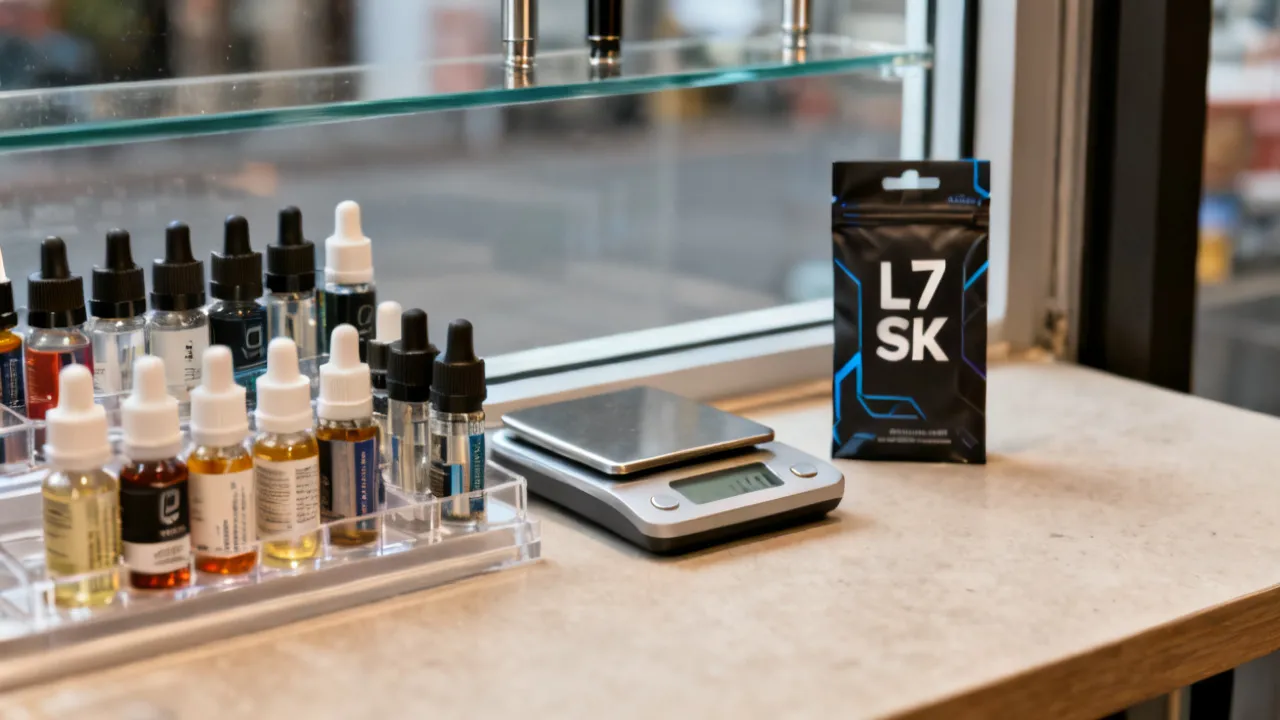
This guide explains how to evaluate the L7 SK vaping line through objective selection criteria, including supplier sourcing, pricing logic, and quality controls. Background context covers what “L7 SK” typically refers to in consumer vaping assortments and why procurement decisions should prioritize batch traceability, lab testing, and consistent formulation—especially when products vary by region and retailer.

This guide explains how to evaluate Arara PB sourcing options by focusing on supplier credibility, pricing structure, and quality controls. Objectively, Arara PB is discussed in terms of procurement risk, documentation, and logistics. You’ll find a comparison table, a step-by-step selection method, and practical conditions to help buyers make consistent, defensible decisions.

This guide explains what Cury Rj is used for, how suppliers typically structure pricing, and what buyers should verify before ordering. Background context outlines how product specifications, lead times, and quality controls influence total cost and risk. The overview is written objectively to help procurement and operations teams compare options and reduce avoidable delays.
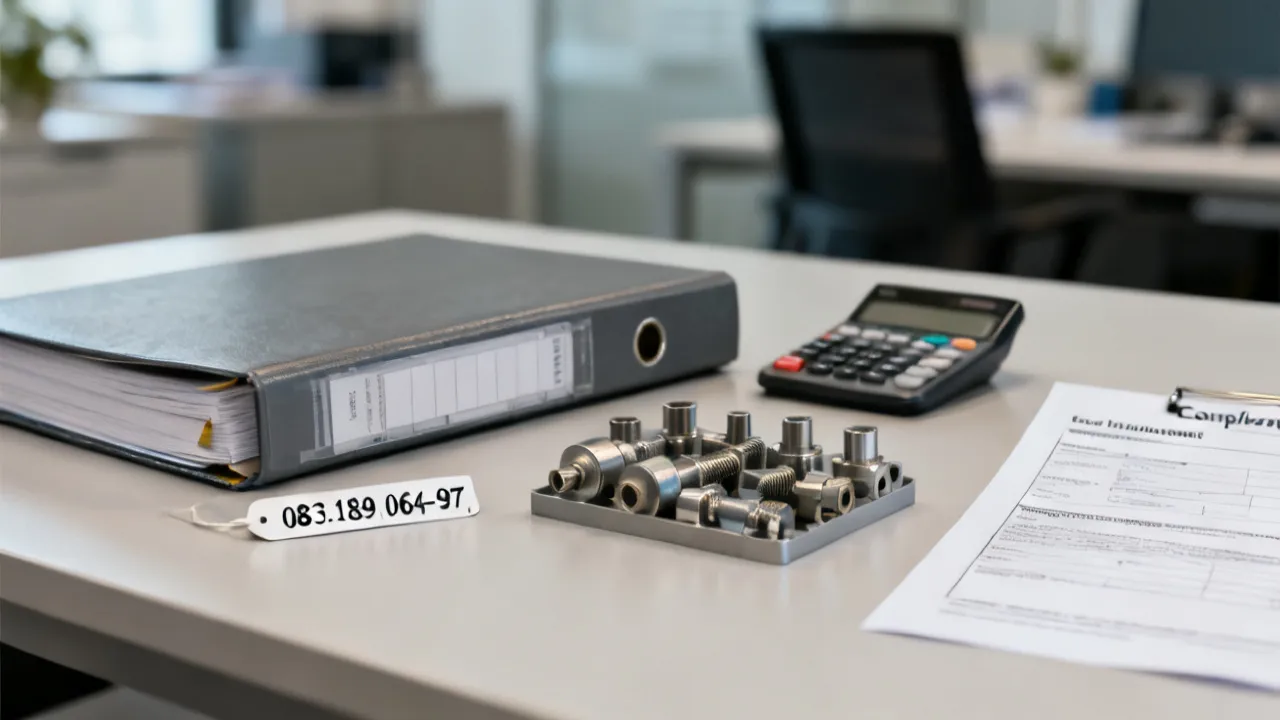
This guide explains how to interpret the product identifier 083.189.064-97 within supply-chain and compliance workflows, including how suppliers document traceability, technical specifications, and verification steps. Objectively, the identifier helps prevent mix-ups, supports audits, and improves accuracy in inventory records. You’ll also find practical conditions, requirements, and FAQs to support decision-making.

This guide explains how the identifier “083.189.064-97” is typically handled in procurement, cataloging, and compliance checks. Objectively, such numeric codes often function as reference keys for product, component, or documentation matching. You’ll also learn how suppliers, documentation flows, and verification conditions shape accurate sourcing decisions in regulated purchasing environments.

This guide explains how to evaluate 18241735 using objective supplier and pricing intelligence. It outlines how to interpret identifiers, compare supplier documentation, and reduce procurement risk through verifiable requirements. Background sections clarify the purpose of item-level codes and why pricing varies across sourcing channels and lead times.
